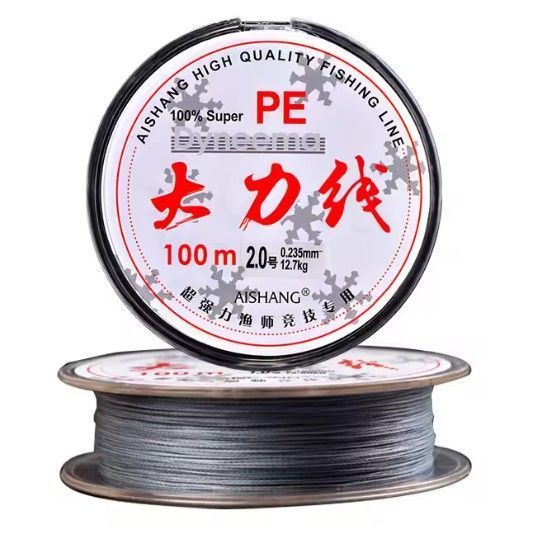
Backing line (or simply backing, from Engl. backing — lining) in fishing is an additional line or braid wound onto the reel spool as the first layer, under the main working line or braided line. Usually, inexpensive monofilament line (less often — braided line) is used for backing to fill the space on the spool to the edge of the lip. This allows saving the main (more expensive) line, as it doesn't need to be wound in large volume, and ensures proper winding without gaps or cones.
What is backing for?
- Filling the spool: If the spool is deep, and the main line is short (e.g., 150–200 m), without backing the winding will be incomplete, leading to reduced casting distance and tangling risk.
- Savings: Allows using less expensive braided line, replacing it with cheap lining.
- Preventing slippage: Backing creates good contact with the spool surface, preventing the main line from slipping during load.
- Additional length: When fighting large fish (e.g., in sea fishing or for trophy carp), backing adds reserve length if the fish pulls out all the main line.
- Improving balance: Ensures even winding, minimizing vibrations and increasing comfort when using the reel.
How to wind backing?
- Take inexpensive monofilament line with diameter 0.2–0.3 mm (or old braid).
- Secure the end of the backing on the spool (with a knot or tape).
- Wind it until 1–2 mm remains to the spool edge (this space for the main line).
- Then tie the main line or braid to the backing (with a knot like "uni" or "blood knot") and wind on top.
Backing is especially useful for spinning and feeder reels, where accuracy and casting distance are important.